

At a Glance
- Well water systems for off-grid properties provide access to groundwater without relying on mains water supplies.
- Traditional wells can be a practical solution where groundwater sits close to the surface, but suitability depends on local geology and water table levels.
- Water quality can vary, so testing and appropriate treatment are important before using well water for drinking.
- A successful well system requires careful planning, protection from contamination, and ongoing maintenance to provide a reliable supply.
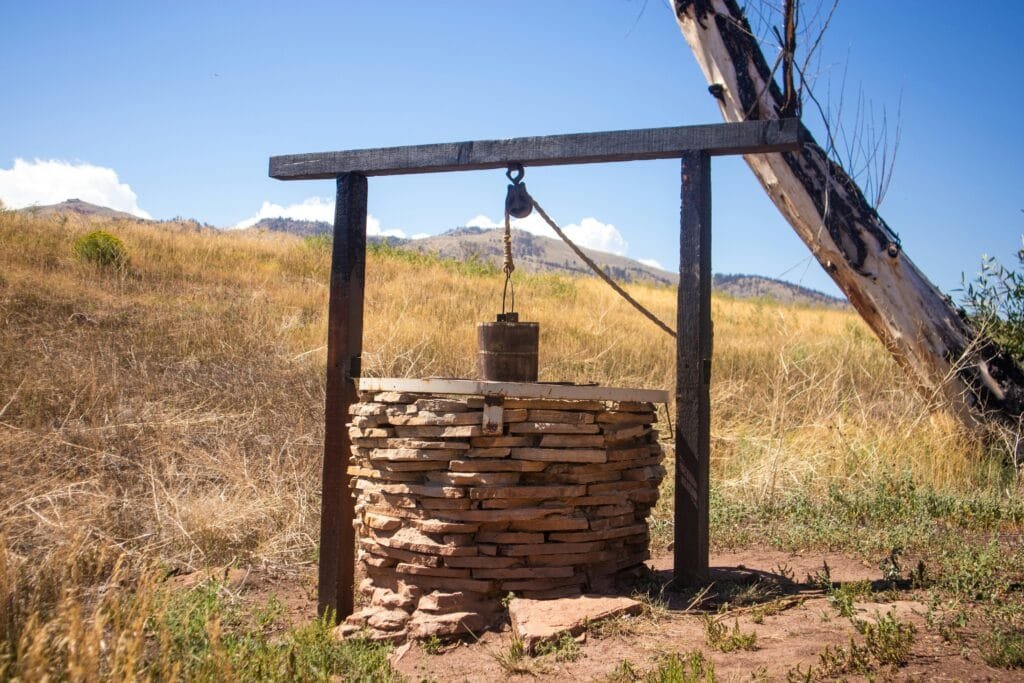
Well water systems are one of the oldest ways of accessing groundwater, and they work great for off-grid properties. Long before modern drilling equipment made deep boreholes possible, many rural homes relied on traditional wells for their water supply.
Wells tap into shallow groundwater layers. This can make them simpler and cheaper, but they also depend more heavily on local conditions. In areas where groundwater sits close to the surface, wells can still provide a practical off-grid water supply.
Today, they remain widely used on properties where the water table is accessible near the surface.
How Well Water Systems Work
The basic idea behind groundwater wells is simple. Rain and surface water filters down through layers of soil, sand, and rock. As it moves underground, some of this water collects above solid rock layers or within porous materials. This creates the water table.
If the water table sits relatively close to the surface, it can be accessed by digging a well. Once the well reaches groundwater, the shaft begins to fill naturally as water seeps in from the surrounding soil and rock.
From there, the water can be drawn out in several ways. Traditional systems used buckets lowered into the well, but many now use manual or electric pumps to move water to the surface.
Most wells are relatively shallow, ranging between 5 and 30 metres deep, depending on the local water table and soil conditions. In the right environment, this makes a well a realistic option for off-grid water access.
Pros of Well Water Systems
When conditions are suitable, well water systems offer several practical advantages for off-grid properties.
Cost is one of the biggest benefits. Where groundwater sits close to the surface, digging a well can often be an inexpensive way to access it without drilling to great depths.
The infrastructure required is also simple. All that’s needed is a way to get the water up to ground level, even a bucket on a rope can work!
Finally, wells have a long history of use in rural communities. Many traditional wells have supplied properties for generations, which shows how reliable they can be when maintained.
Limitations and Potential Drawbacks
Like any off-grid water source, wells do have limitations.
The biggest factor is the water table. Some wells provide only moderate flow depending on the aquifer and soil conditions, and because wells rely on relatively shallow groundwater, changes in water levels can affect the supply. In dry periods wells may run low or even dry.
Shallow groundwater is also more exposed to contamination from the surrounding environment if the well is not properly protected.
Maintenance can be required over time. Wells may occasionally need cleaning or repairs to the lining or structure, particularly if they have been in use for many years.
Water Quality Considerations
Because wells draw from shallower groundwater, water quality can be more influenced by nearby activity. Nearby animals, septic systems, and surface runoff can all affect groundwater. This makes proper protection of the well opening especially important.
For this reason, water testing should always be carried out before using well water for drinking. Testing helps identify any bacteria, minerals, or contamination that may be present.
Depending on the results, some wells may require basic filtration or treatment to make the water useable.
Basic Well System Components
Although wells vary in design, most traditional off-grid well water systems include several key components.
These typically include:
- the dug well shaft
- a lining or wall that prevents the sides from collapsing
- a protective cover over the opening to keep debris, insects and animals out
- a pump or bucket system for drawing water
- possibly pipes delivering water to the property or storage tanks
Factors That Determine Whether a Well Is Possible
Several factors determine whether a well will work effectively. One of the most important is the depth of the water table. If groundwater sits too deep below the surface, digging a well may not be practical.
Soil conditions also matter. You need stable soil or rock to support the well structure and prevent collapse. Local geology and rainfall patterns both influence how much groundwater is available.
Regulations can also play a role. Some areas have rules regarding groundwater access or well construction that need to be considered before digging.
A Traditional Solution That Still Works
Despite the popularity of other water collection methods, well water systems remain a practical solution for off-grid properties where groundwater sits relatively close to the surface.
They may not produce the same volumes as boreholes, but a well can still provide a reliable off-grid well water supply when properly maintained and protected.
For many rural homes and smallholdings, traditional wells continue to offer a simple and effective way to access groundwater. If the conditions are right, they can form an important part of a dependable off-grid water system.
To get an overview of all aspects of a successful off-grid water system, click here.
To find out more about off-grid living, return to the Reading Room.