

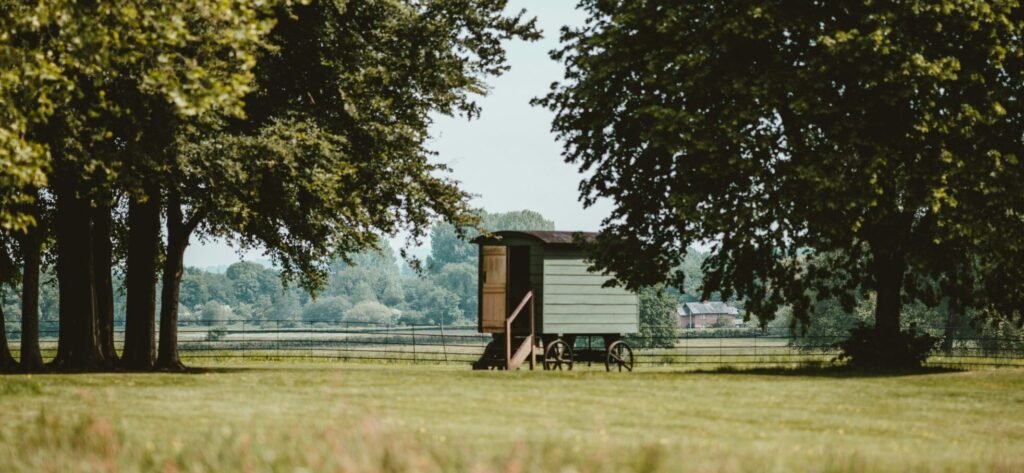
At a Glance
- Shepherd’s huts can provide a compact and quirky option for off-grid living, combining traditional design with modern self-sufficient systems.
- Successful year-round living requires careful planning around insulation, heating, energy generation, water supply, and waste management.
- Their small size can make them more affordable and efficient, but it also means storage, space, and layout need to be carefully considered.
- A shepherd’s hut can work well as an off-grid home, guest space, or low-impact retreat when designed around the needs of the people using it.
Shepherd’s huts have become incredibly popular over the last few years. Most people think of them as cosy glamping accommodation or perhaps a garden office, but there’s no reason they can’t become a comfortable off-grid home to live in. In fact, their compact size, simple construction and transportable design make them a fantastic option if you’re looking to embrace a simpler lifestyle. With a few thoughtful additions, a cosy shepherd’s hut can provide everything you need for full-time off-grid living.
Why an Off-Grid Shepherd’s Hut Makes Sense
One of the biggest advantages of a shepherd’s hut is its size. A smaller home naturally requires less energy to heat, less electricity to power, and less maintenance overall. If you’ve ever looked inside a well-designed campervan or narrowboat, you’ll know just how much can fit into a surprisingly small space.
Being built on a steel chassis also offers a little more flexibility than a permanent building. While planning permission should always be checked before placing any structure on land, a transportable shepherd’s hut may suit people looking for a lower-impact way to begin their off-grid journey.
Adding the Off-Grid Essentials
Although many shepherd’s huts are connected to mains electricity and water for glamping, they’re easily adapted for independent living.
A modest solar setup is often all that’s needed to power lights, charging points and appliances. If roof space is limited or curved, portable or flexible solar panels can provide additional generating capacity without taking up valuable room.
You’ll also need a water supply. The ideal tank size depends on how easily you can refill it. If you have easy access to freshwater refills, then consider a smaller tank or even a refillable portable tank to save space. Alternatively, a larger built-in tank or external water storage could work best if access to water is limited.
Composting toilets are another excellent option. There are even portable models that can be tucked away when not in use, helping to maximise your living space.
For washing, some people create a compact or multi-purpose shower room. Another option is to build a simple outdoor washroom if you’re planning to stay in one place long-term.
Heating is easily covered by a small wood burner, which adds plenty of character as well as warmth. If you’d rather avoid solid fuel, compact diesel heaters are also straightforward to install.
Cooking comes down to personal preference. Gas remains popular because it’s simple and reliable. Meanwhile, induction hobs work brilliantly if your solar system and battery bank are sized accordingly. Portable versions of both are readily available.
Making the Most of a Small Space
Like any tiny home, storage needs careful thought. Multi-purpose furniture, under-bed storage and clever shelving all help make the most of the available space.
If you have a long-term spot for your shepherd’s hut, adding a small shed or covered outdoor seating area can dramatically increase your usable living space without making the hut itself any larger.
Perhaps the biggest adjustment isn’t finding somewhere to store your belongings, it’s deciding what you really need in the first place. Living in a shepherd’s hut naturally encourages a simpler lifestyle, and many people find that’s one of its biggest appeals.
Is It Right for You?
An off-grid shepherd’s hut won’t suit everyone. It’s probably best suited to one person or a couple who enjoy living simply and spending plenty of time outdoors.
But if you’re looking for an affordable, comfortable and slightly quirky way to live off-grid, it’s certainly worth considering.
If you’re interested in alternative housing but don’t know if a shepherd’s hut is right for you, you might want to consider a converted shipping container.