

At a Glance
- Choosing between gas and induction cooking off-grid depends on your energy system, available resources, cooking habits, and personal preferences.
- Gas provides reliable cooking with lower electrical demand but requires fuel storage, ventilation, and regular supply management.
- Induction cooking is highly efficient and easy to integrate with renewable energy systems but requires sufficient battery capacity and inverter capability.
- The best option is the one that matches your off-grid setup, rather than assuming one method is universally better.
Choosing how you’re going to cook is one of the biggest decisions when designing an off-grid home. For years, gas has been the go-to option, but improvements in solar panels, lithium batteries and inverters have made induction cooking a realistic alternative for off-grid living.
So, which is better?
The honest answer is… neither. Both have their advantages and drawbacks. The right choice depends on your existing setup, your lifestyle, and how you like to cook.
Gas Cooking Off-Grid
Gas has long been a favourite amongst off-grid homeowners, and it’s easy to see why. Whether you opt for a built-in hob or a portable camping stove, LPG provides reliable cooking that doesn’t rely on your battery bank.
One of the biggest advantages of gas is that it works regardless of the weather. A week of cloud cover won’t stop you cooking dinner, and you don’t need to worry about how much charge is left in your batteries.
Gas systems are also relatively straightforward to install and are available in a huge range of sizes. This makes them suitable for everything, from tiny campers to larger off-grid homes.
The downside, of course, is that you’ll need to refill or replace gas bottles, which adds an ongoing running cost. Safe storage and good ventilation are also essential whenever you’re using gas appliances. One thing that’s often overlooked is that burning gas also produces water vapour, which can contribute to condensation particularly during colder months.
Induction Cooking Off-Grid
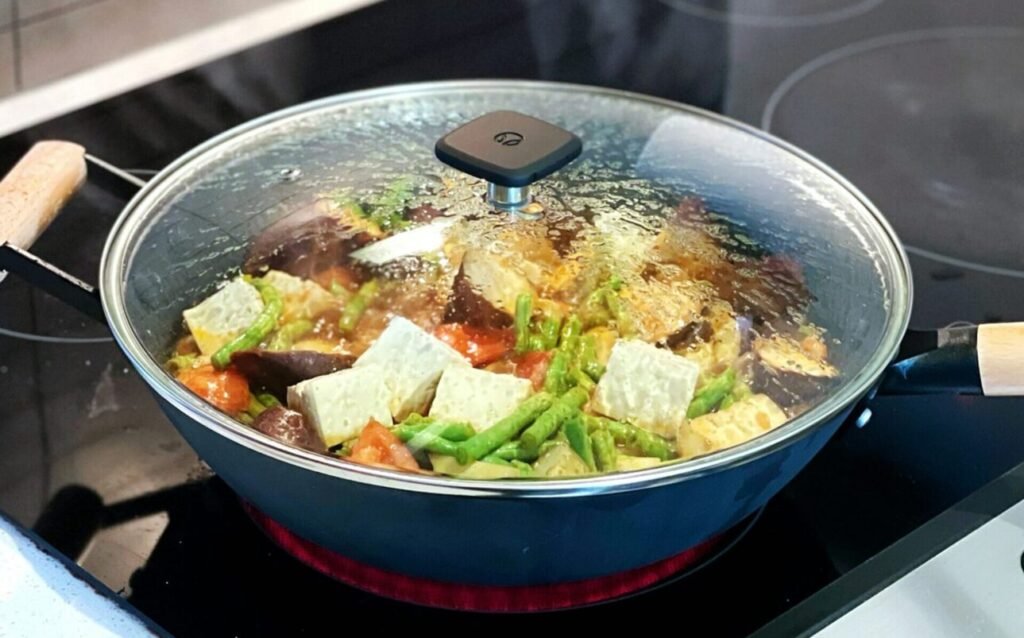
Induction hobs have become increasingly popular as off-grid electrical systems have improved. Rather than burning fuel, they use electricity to heat compatible pans directly, making them incredibly efficient.
They’re easy to clean, and there’s no open flame. Plus, once you’ve invested in a capable solar system, you’re effectively cooking using electricity you’ve generated yourself.
Portable induction hot plates are also widely available. This makes them a practical option even if you don’t want a permanent fitted kitchen.
The biggest consideration is power. Induction hobs draw a significant amount of electricity, so you’ll need an appropriately sized inverter and battery bank to support them. While solar panels can replace that energy, you’ll still need enough stored power to cook when the sun isn’t shining.
Which Option Is Right for You?
Rather than choosing based on whether you live in a van, boat or cabin, it’s better to look at the systems you already have and how you live.
If you have a relatively modest electrical setup, gas is often the simpler option. It won’t place extra demand on your batteries and allows you to keep your solar system smaller. If you already carry LPG for heating, hot water or other appliances, adding a gas hob may make far more sense than installing a larger battery bank and inverter purely for cooking.
On the other hand, if you’ve already invested in a large solar array, a healthy battery bank and a quality inverter, induction becomes a much more attractive choice. You’re making the most of the electricity you’re already generating rather than buying another fuel source.
Finally, think about how you actually cook. Someone who only boils the kettle and prepares simple meals will have very different requirements to someone baking regularly or cooking for a family. Choosing a system that suits your everyday routine is often more important than chasing the latest technology.
Why Not Both?
Of course, you don’t necessarily have to choose between cooking on gas or induction for your off-grid home.
Many people combine the two, using induction as their everyday cooking method while keeping a small portable camping stove for emergencies, outdoor cooking or those long stretches of grey weather.
Likewise, if gas is your primary cooking method, a portable electric hot plate can be useful when you’re plugged into external electricity or have plenty of spare solar power.
Having a backup option can add flexibility and redundancy without significantly increasing cost or complexity.
Final Thoughts
When it comes to deciding between gas and induction for off-grid cooking, there isn’t a universal winner.
Gas offers simplicity, reliability and independence from your electrical system. Meanwhile, induction provides a modern, efficient way to cook using the energy you’ve generated yourself.
Ultimately, the best cooking setup is the one that complements the rest of your off-grid systems and fits the way you live. Rather than researching which is better, it’s worth asking which one makes the most sense for your home.
For a general guide to cooking off-grid click here.