

At a Glance
- One acre of land can potentially support an off-grid home, renewable energy systems, food production, and small-scale self-sufficiency with careful planning.
- Maximising space through techniques such as permaculture, vertical growing, and efficient design can increase what a small plot can provide.
- The amount of independence possible depends on climate, soil quality, skills, resources, and the level of self-sufficiency you are aiming for.
- A smaller piece of land can still create a resilient and sustainable lifestyle when it is designed around your needs and priorities.
The idea of “one off-grid acre” is simple on the surface, but can a single acre of land support your home, your utilities, and a meaningful portion of your food?
In practice, it sits somewhere between realistic and idealistic. One acre won’t do everything for everyone, but it can go a long way when it’s planned properly. For many people, it’s not about total self-sufficiency. It’s about reducing reliance on external systems while keeping things manageable.
This is obviously only about off-grid living on land – boats, vans, and other mobile setups work very differently. On land, space becomes one of your main resources, and how you use it matters just as much as how much of it you have.
What Has to Fit Into One Off-Grid Acre
An acre is roughly 4,000 square metres. It sounds generous until you start allocating space.
You’re likely trying to balance:
- a home and access
- water storage or collection systems
- energy generation (often solar)
- food production areas
- possibly small livestock like chickens or bees
It becomes a question of priorities quite quickly. Expanding one area usually means reducing another. A larger garden might mean a smaller energy array. Adding animals means less growing space or more need for feed.
The acre can support a lot, but it doesn’t stretch infinitely.
Efficiency Over Expansion
The success of a one acre off-grid setup comes down to how efficiently the land is used.
You’re not relying on scale. You’re relying on layout, timing, and choosing the right systems. A well-organised acre can outperform a poorly used larger plot.
This is where practical design starts to matter. Sunlight, drainage, access routes, and how systems connect all influence how productive the space becomes. Small inefficiencies add up quickly on a smaller plot.
What You Can Realistically Achieve
With good management, one acre can support a solid level of independence.
For most setups, that includes:
- a large proportion of your vegetables
- some fruit production
- eggs from chickens
- space for your home, energy and water systems
In many cases, this is enough to noticeably reduce living costs and reliance on external supply chains.
What’s less realistic is producing everything. Staple crops like grains, large-scale meat production, or complete year-round variety are harder to achieve within that space.
That doesn’t make the approach unworkable. It just reframes it. You’re building a system that covers a lot of your needs, not necessarily all of them.
Making the Most of Limited Space
This is where the one off-grid acre approach becomes more interesting. Small spaces reward creative methods.
A few techniques that make a noticeable difference:
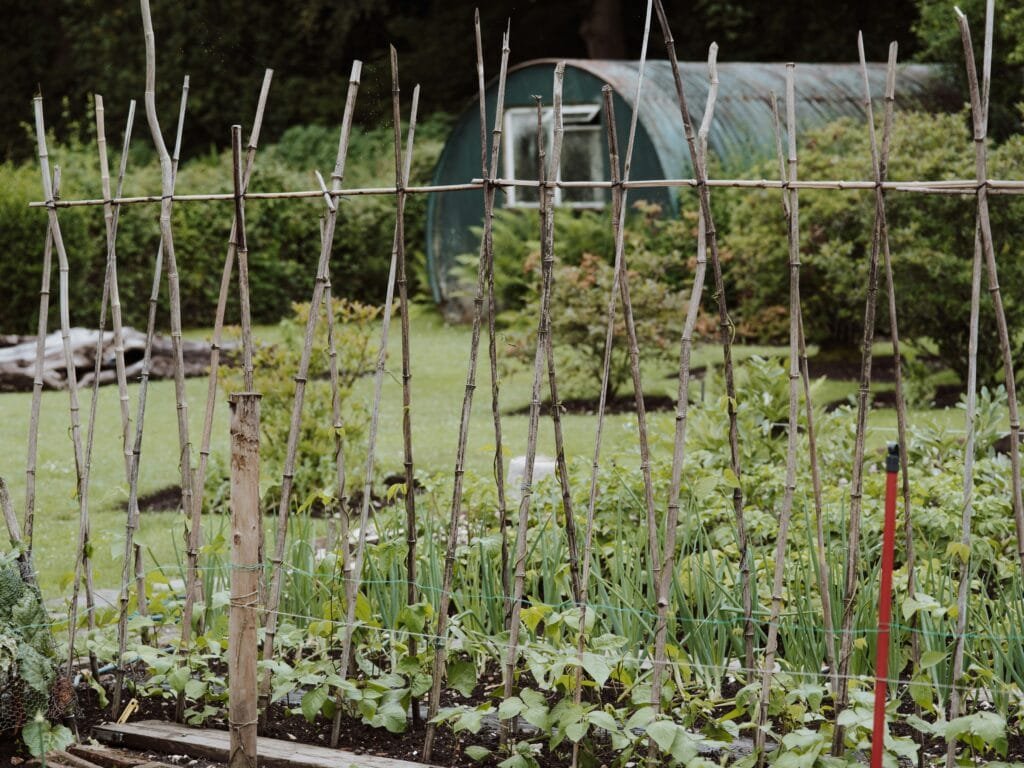
- Vertical growing: Using trellises, stacked wall planters, or climbing crops to increase yield without increasing footprint
- Companion planting and permaculture principles: Coordinating plants to support each other, improving productivity and soil health
- Food forest layouts: Layering trees, shrubs, and ground crops to use space more efficiently over time
- Successive planting: Rotating crops through the same space across the seasons
- Multi-use structures: Polytunnels or covered areas that extend growing seasons and double as rainwater catchment
None of these are complicated on their own, but together they can significantly increase what an acre can produce.
Constraints and Trade-Offs
Even with good planning, there are limits that shape what’s possible.
Climate affects how long things grow, while soil quality affects how well they grow. Time and labour affect how much you can realistically maintain.
There’s also the question of expectations. A simple, seasonal diet is much easier to support than trying to replicate a supermarket.
Rather than seeing these as barriers, it’s more useful to treat them as design constraints. They help define what your version of “working” looks like.
A Flexible Approach Works Best
The idea of one off-grid acre works best when it isn’t treated as a strict rule.
You might grow most of your vegetables but still buy staples.
Maybe you’ll keep chickens but not larger livestock.
You could be fully off-grid for energy while still relying on external water in certain seasons.
These compromises aren’t failures. They’re part of building something that fits your land and your time.
For many people, one acre becomes a strong middle ground. It offers a higher level of independence without becoming unmanageable. It also leaves room to learn and adapt, which is often where the biggest gains come from over time.
A Practical Way to Look at It
One acre of off-grid land isn’t a guarantee of full self-sufficiency, but it is a workable and realistic goal for many people. It encourages you to think carefully about how systems fit together, how space is used, and what you need day to day.
With thoughtful design and steady improvements, a single acre can support a comfortable, low-impact life. It won’t be perfect, or limitless, but it will be practical, and often more than enough for what people are actually trying to achieve.
If you’re looking for some food-growing tips for your off-grid land, click here.