

At a Glance
- No UK government, council or charity gives away land to people who want to live on it.
- In England and Wales, adverse possession takes ten or twelve years of open occupation, and a registered owner can usually stop it.
- Crofts, council self-build registers, and community buyouts are real routes, but none of them are free.
- Cheap land with no planning prospects usually costs more, in time and stress, than a more expensive plot you can use.
Most of what’s said about free land for off-grid living in the UK comes from hopeful forum threads and a few videos from other countries. That’s because the honest answer is that, if you’re looking for land to live on off-grid in the UK, there isn’t a scheme that gives it to you.
What there is, and what keeps the myth alive, is a handful of real mechanisms that people half-remember and mislabel: squatters’ rights, council land, Scottish crofts and community land. Each one is worth understanding, because each one leads somewhere useful, just not to a free field with a cabin on it.
Where the Idea Comes From
The picture of free land mostly comes from America. The Homestead Acts of the 1860s handed settlers 160 acres for the price of living on it, and a few small US towns still offer plots to attract residents. Britain never had anything like it. Almost every acre here has been owned, mapped and taxed for centuries, and the pieces that look empty are usually owned by someone who simply hasn’t visited lately.
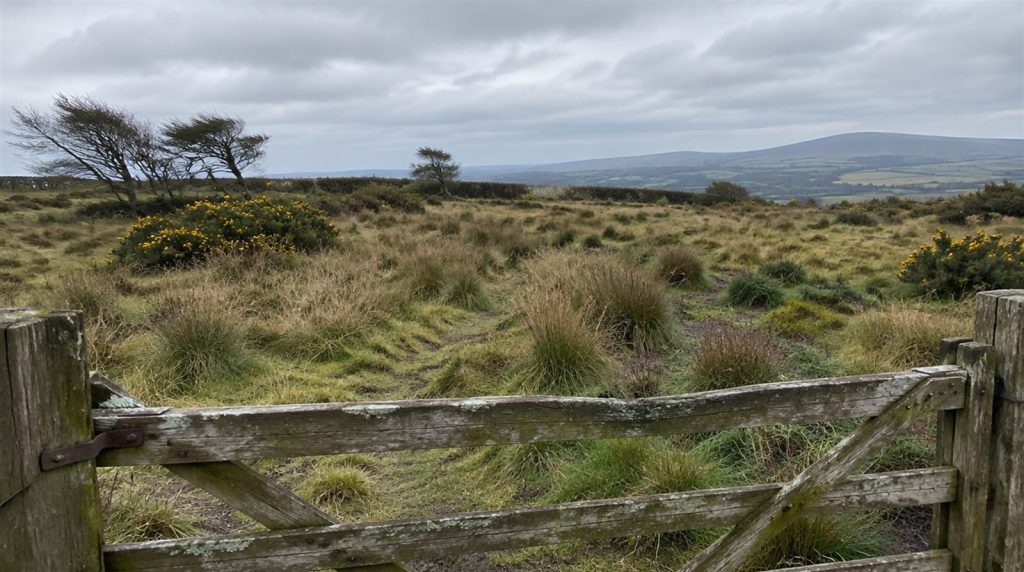
A field that looks empty still has an owner, and the register search further down this article is usually the quickest way to find out who.
Adverse Possession Isn’t Free
This is the one people mean when they say squatters’ rights. In England and Wales, if you occupy land openly, without permission and as if it were your own, you can apply to be registered as its owner after ten years if the land is registered, or twelve years if it isn’t. The catch, since the Land Registration Act 2002, is that the registered owner is notified of your application and can usually defeat it simply by objecting, then has two years to evict you. HM Land Registry’s practice guide on adverse possession explains the process in full.
So it’s a decade of insecure occupation, with no right to build anything in the meantime, ending in an application the owner can block. It resolves old boundary disputes and forgotten strips beside a garden. It is not a realistic route to an off-grid home. Scotland has a separate system with its own rules, so check the position there before assuming any of this applies.
Council Land and Self-Build Registers
Councils own a lot of land, and they do sell it, but they don’t give it away. What they must do in England, under the Self-build and Custom Housebuilding Act 2015, is keep a register of people who want a plot to build their own home on, and grant enough planning permissions to meet that demand. Your local authority will have a self-build register page explaining how to join, and the duty to keep it is set out in the Act.
Some councils charge a fee to join and others don’t, but it’s worth doing, because it’s the only formal way of telling your council you want a plot. The plot, when one comes, is sold at a price, and the home you build will need planning permission like any other. An off-grid design isn’t ruled out, but it’s a normal application, not a shortcut.
Scottish Crofts
Scottish crofts get mentioned as if they were allotments handed out by the government. A croft is a small agricultural holding under a specific legal system, regulated by the Crofting Commission, and you get one in one of three ways: an existing tenant assigns the tenancy to you with the Commission’s approval, you buy a croft outright and become an owner-occupier crofter, or you rent a vacant one. The Crofting Commission’s guide to acquiring a croft sets out each route.
All three involve money changing hands, a formal application and a set of legal duties, including living on or near the croft and working the land. Plenty of people live wonderful off-grid lives on crofts, but if you’re new to crofting, expect to pay for one whichever route you take.
Community Ownership Routes
The closest thing the UK has to land coming to people rather than the other way round is community ownership. In Scotland, the Community Right to Buy lets a properly constituted community body register an interest in land and get first refusal when it’s sold, and community asset transfer lets communities take on land from public bodies. The Scottish Government’s overview explains the routes. In England, the right to bid on Assets of Community Value gives a community group a pause and a chance to raise the money when a listed asset comes up for sale.
Notice the pattern. These are for communities, they usually involve buying, and they can take years of organising. If you’d rather be part of something than own something, they’re worth a look, and community land trusts and eco-village projects sometimes offer pitches or plots to members at below-market cost.
Unregistered and Common Land
You’ll hear that a surprising share of England and Wales is unregistered, and it’s true, but unregistered means the ownership hasn’t been recorded at HM Land Registry, not that nobody holds it. Ownership sits in old deeds somewhere. For anything that is registered, you can check who owns it for £7 through the GOV.UK search of the register, and it’s the first thing to do before you get attached to a plot.
Common land is the other trap. It’s owned by someone, and other people, known as commoners, have rights to use it. Putting up any building on it needs consent under the Commons Act 2006 as well as planning permission, so it’s not somewhere you can expect to set up home.
What Cheap Land Really Costs
If free land doesn’t exist, cheap land certainly does, and it’s where the real decision sits. Agricultural land, woodland and paddocks come up at prices that look astonishing next to a residential plot. They look that way because you’re buying the land’s existing use, not the right to live on it.
What matters is whether you’ll ever be allowed to live on the land, so before you buy, work through how to check whether land has planning potential, and read up on understanding land use classes. A plot with a realistic planning case at three times the price is often the cheaper purchase, because the alternative is years of enforcement notices or land you can only visit.
Final Thoughts
There’s no free land for off-grid living in the UK, and anyone selling you a course that says otherwise is selling the course, not the land. What there is instead is a set of honest routes: a self-build register, a croft, a community project, or a modest plot with the planning done properly.
None of them are free, but each can lead to a home you’re allowed to live in, which is the part that actually matters.
To find out more about off-grid living return to our Reading Room.