At a Glance
- Van insulation is about keeping the inside of the steel warm so damp air can’t condense on it, as much as about keeping you warm.
- A plastic vapour barrier that isn’t perfectly sealed traps moisture against the metal, which is worse than no barrier at all.
- Closed-cell foam board, spray foam, sheep’s wool and Thinsulate all work, and each suits a different budget, skill level and climate.
- Windows, the cab, floor edges and steel ribs lose more heat than the panels, so treat those before you buy more insulation.
If you’re converting a van to live in, insulation is the job that decides whether the build is comfortable in February or just survivable. Van insulation is a different problem from insulating a house or cabin, because you’re working inside a thin steel skin with ribs every half metre and no cavity. If your home is a building rather than a vehicle, our guide to insulation options for your off-grid home covers that side.
Most campervan conversion insulation guides argue about R-values. The real question, the one almost everyone gets wrong, is what happens to moisture once the walls are closed up.
Why a Van Is Different
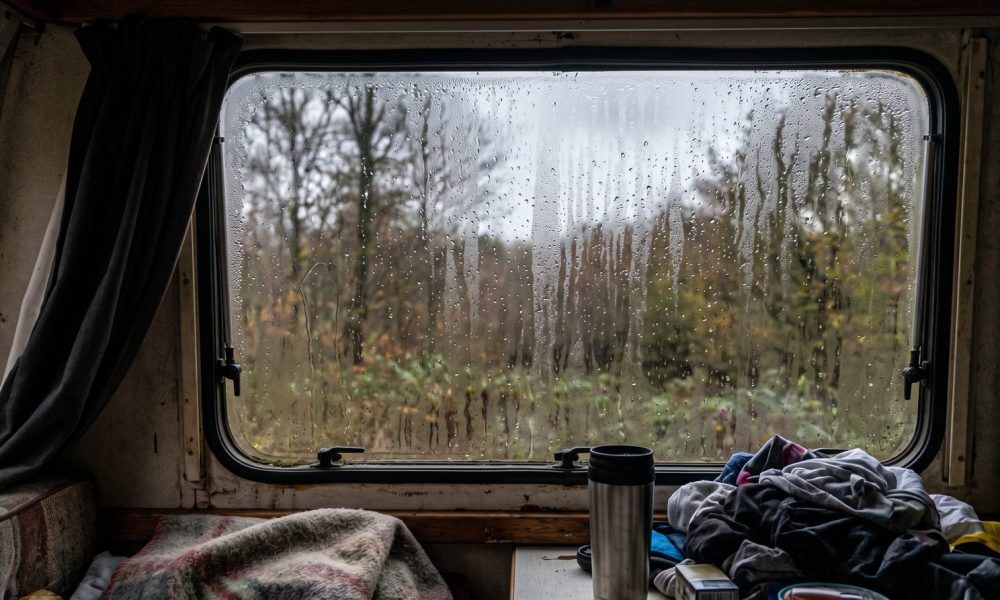
Steel carries heat several hundred times better than timber, so an uninsulated van panel is as cold as the air outside. In winter that puts every bit of metal you can reach below the dew point, and the damp air from breathing and cooking condenses on it.
So insulating a van isn’t only about comfort. It’s about holding the inside of the skin above the dew point so water stays in the air rather than on the steel, where it becomes rust.
In a van, insulation is as much a damp fix as a heating one.
The Vapour Barrier Mistake
The textbook answer, borrowed from house building, is a vapour barrier: a plastic sheet on the warm side of the insulation so moist air never reaches the metal, and with flat walls and careful taping it works in a house.
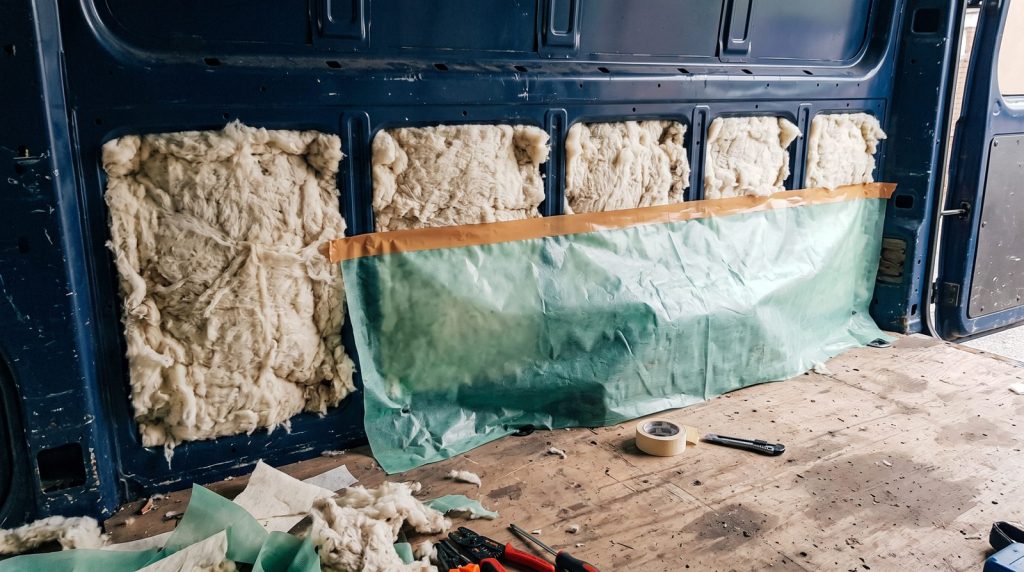
In a van it almost never does. Ribs, wiring, window cut-outs and screws through the ply all leave gaps, and moisture doesn’t need a big one. Once behind an imperfect barrier it’s trapped against cold steel with no way out.
So you have two honest options. Commit to a fully sealed build, with closed-cell foam bonded to the metal and every edge sealed, so moisture has no air gap to reach. Or let the walls breathe, use an insulation that tolerates damp and dries again, and rely on ventilation to keep humidity down. What doesn’t work is a half-sealed sheet over fluffy insulation, which is most first conversions.
The problem is mixing the two approaches and ending up with a system that does neither properly.
What Insulation for a Van Conversion
The right insulation choice for your van conversion depends on the moisture strategy you have chosen, your budget and how much work you want to do yourself.
- PIR or XPS foam board gives the most insulation per centimetre and doesn’t absorb water. It’s rigid, so it needs cutting to fit and the rib gaps filling with expanding foam. It suits a sealed build.
- Closed-cell spray foam bonds to the steel, fills every gap and seals the van in one go, so professional converters favour it. It’s expensive, permanent, and needs suitable protective equipment and ventilation during installation. Plan concealed wiring before spraying; surface-mounted cables in suitable ducting are another option.
- Sheep’s wool is breathable, pleasant to handle and copes with getting damp and drying again. It’s bulkier for the same warmth and needs a thin foam layer to keep it off the bare metal. It suits a breathable build.
- Thinsulate is a synthetic batt that doesn’t hold water, cuts with scissors and glues into awkward spaces. It is easy to fit, but more expensive per square metre.
Avoid loose glass-fibre, which holds water, and reflective bubble wrap on its own, which does little pressed flat against steel.
There is no best material, just the best choice for the build you are actually doing.
Where the Heat Actually Goes
The heat leaves through the windows, the cab, the floor edges and the ribs, in roughly that order.
Glass is the coldest surface in the van and often the largest, so insulated window covers come before another layer anywhere else. The cab is a wall of glass and steel and needs a proper curtain or bulkhead. Under the living-area floor, a thin layer of foam board is usually enough.
The steel ribs are the thermal bridges. You can’t insulate them as deeply as the panels, but you can cover them with a thin layer of foam or Thinsulate before the ply goes on. Any rib left bare is the first place condensation forms.
Prioritise the windows, cab and exposed ribs where heat escapes fastest.
How Much Is Enough
It depends on how you’ll use the van. A summer weekend van needs 25mm of board to stop it becoming an oven by day and a fridge by night. Living in it through a UK winter, you’ll want 40 to 50mm in the walls and ceiling and as much as you can fit around the windows. Heading somewhere colder, the same van needs more again, so check what converters in that climate do.
More always helps, but each centimetre buys less than the last. Past a point the money does more in a better heater, window covers and ventilation.
The important thing is to look at insulation, heating and ventilation as a complete system rather than assuming that simply adding more insulation will solve every problem.
Fit the Ventilation First
Whatever you insulate with, you’ll still breathe, cook and dry towels, so the van needs to move damp air out. A roof fan with a trickle setting is the standard answer, paired with a floor vent or a cracked window so air can come in as well as out.
Plan the fan and any heater ducting before the insulation goes in. Concealed wiring needs planning early too, although surface-mounted wiring can be added later. Read our piece on damp and condensation before you seal anything up, because insulation only does half the job.
Insulation and ventilation work together: one warms the surfaces, while the other moves damp air out.
Final Thoughts
The best van insulation isn’t the one with the highest number on the packet. It’s the one that matches a clear moisture strategy, covers the ribs and windows, and leaves room for air to move.
A well-insulated van holds on to the heat its heater produces.
If you’d rather buy a van that someone has already built well, you can see what’s on the market in our listings of vehicles for sale.
To find out more about off-grid living return to our Reading Room.
We use affiliate links in some posts, including this one. If you buy through one, we receive a commission at no extra cost to you, which helps keep the Reading Room going.