

At a Glance
- Off-grid water usually needs some level of treatment before it’s safe or practical to use.
- The type of filtration required depends on your water source and how the water will be used.
- Drinking water needs a higher level of treatment than water used for cleaning, washing, or irrigation.
- A well-matched filtration system protects both your health and your off-grid water system while avoiding unnecessary cost and complexity.
If you’re looking into setting up an off-grid water system, you’ll know that finding water is only part of the process. The next step is making sure that water is usable. That’s where you begin to realise the importance of water treatment for off-grid systems. Whether it comes from rain, a well, or somewhere else, water often isn’t ready to use straight away. In most cases, it needs some level of filtration or purification before it’s safe or practical.
Finding water solves the supply problem. Treatment solves the usability problem.
Why Filtration Matters and What’s in Your Water
Off-grid water supplies aren’t treated in the way mains water is. There’s no built-in system removing contaminants before it reaches your tap, so that responsibility sits with you.
Water treatment is about making water safe and usable, but also about understanding what you’re actually dealing with. The type of treatment you need depends entirely on your water source. Off-grid water sources can contain a mix of different contaminants, which are usually grouped into a few broad categories:
- Biological contaminants: bacteria, viruses, and parasites. These are the main concern for drinking water, particularly from surface sources like rivers and lakes.
- Physical contaminants: sediment, dirt, and organic debris. These affect clarity and can clog pipes, pumps, and filters over time.
- Chemical contaminants: these can come from agricultural runoff, nearby industry, or even household activity. They’re not always visible, but can still be harmful.
- Natural minerals: common in groundwater. Iron, manganese, and hardness can affect taste, staining, and system performance without necessarily making water unsafe.
Different sources come with different risks. Surface water is more exposed to biological contamination. Groundwater is often higher in minerals. Rainwater is usually cleaner, but it can still pick up debris and contaminants from roofs and storage.
Without some level of filtration, these elements can affect both your health and your system. Water may carry bacteria that cause illness, or it may simply damage equipment and make everyday use unpleasant.
That said, not all water needs to be treated to the same level. The key is matching the level of filtration to how the water will be used, rather than assuming everything must be drinkable.
Different Levels of Filtration
One of the most useful ways to think about water treatment is in levels.
Not all water needs to be filtered or purified to drinking standard. In many off-grid systems, water goes through different treatment based on how it will be used.
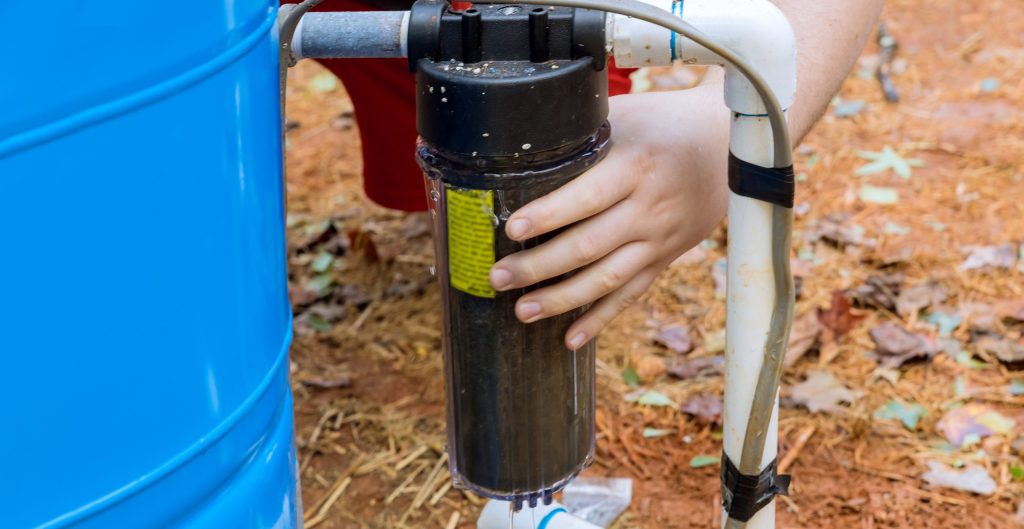
At the most basic level, filtration removes sediment and visible debris. This protects your system and improves clarity.
A step up from that improves general water quality for everyday use. This might include removing smaller particles or improving taste and smell.
Full purification is the highest level. This is where water is treated to make it safe for drinking and cooking.
There are several ways to achieve these levels, including cartridge filters, UV purification, chemical treatments, and boiling. Each treatment method has its place depending on the water source and how the water will be used.
These systems can be simple or more advanced, but the key is choosing the right level rather than overcomplicating things.
When You Do (and Don’t) Need Drinking-Quality Water
A common mistake is assuming all water must be drinkable. In reality, that often adds unnecessary complexity.
Drinking and cooking water should always be properly treated, and the same generally applies to brushing teeth.
Other uses are different. Water for showering, washing clothes, or cleaning doesn’t usually need full purification. Basic filtration is often enough, depending on the source.
For irrigation or outdoor use, treatment may be unnecessary or minimal.
This approach reduces the load on your filtration system and makes the overall setup more manageable. It also helps keep costs and maintenance lower.
Treatment as Part of a Complete System
Water filtration isn’t an independent process; it works as part of a wider off-grid water system.
It sits between your water source and how that water is used. In most setups, water is collected, stored, filtered, and then distributed.
The exact setup will depend on your source. A rainwater system may need different filtration to a river-fed system. A borehole may require less biological treatment but more attention to minerals.
Understanding your source is what allows you to choose the right filtration approach.
A Necessary Step, Not an Optional Extra
Off-grid water treatment isn’t about making things complicated. It’s about making your water usable, safe, and reliable.
The key is to match the level of filtration to the way you actually use your water. Start with your source, understand the risks, and build from there.
You don’t need the most advanced system straight away. A simple, well-matched setup is usually far more effective than something oversized or unnecessarily complicated.

For a general guide to off-grid water click here.
To find out more about off-grid living return to our Reading Room.