

At a Glance
- Starlink Mini is a small, low-power dish for campers and boats, sold in the UK on Roam plans at £55 a month for 100GB or £100 unlimited, at the time of writing.
- It draws roughly 20 to 40 watts in use, far less than the standard dish and well within reach of a modest leisure battery.
- Whether it’s worth it depends on how often you’re out of mobile range, because a 4G or 5G router is cheaper wherever there’s signal.
- Starlink is still the only affordable satellite option for now, but rivals such as Amazon Leo are due, so avoid long commitments.
If you live in a camper or on a boat, internet is the thing that decides whether you can work, stream and stay in touch from wherever you’ve parked or moored.
Starlink Mini owners in the UK talk about it as the kit that finally made satellite practical on the move, and for a lot of people it is. However it’s also a monthly bill and a constant draw on your batteries, so it’s worth thinking through before you buy.
For the wider choice between satellite, mobile routers and signal boosters, read our guide on how to get internet and phone signal off-grid.
What the Mini Actually Is
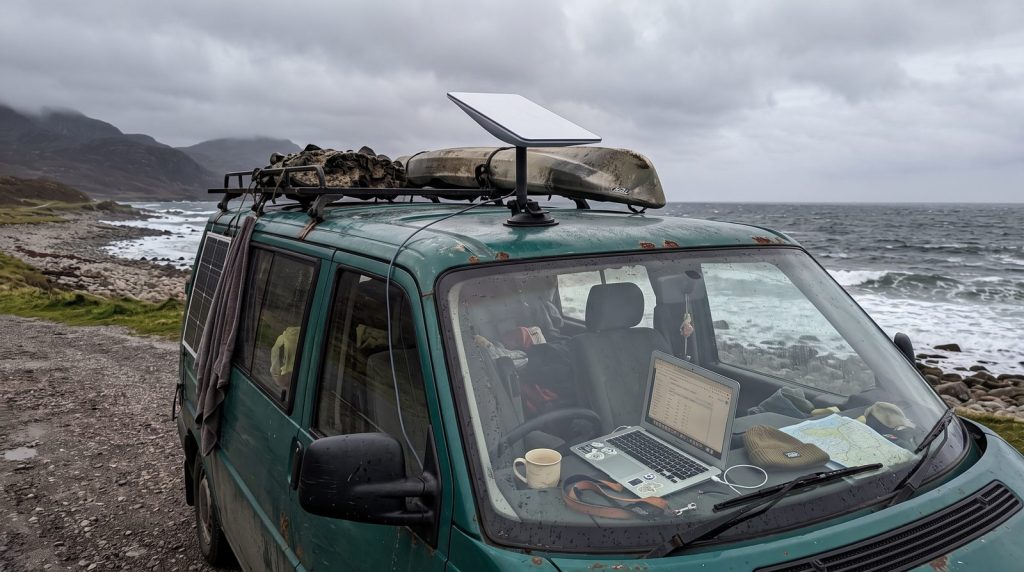
The Mini combines the dish and the Wi-Fi router into one unit about the size of a laptop.
It weighs a little over a kilogram, runs from a USB-C or DC supply, and can sit on a dashboard, a roof rack or a boat’s hatch with a clear view of the sky.
That’s the point of it for a campervan or narrowboat set-up. You don’t need a separate router, a mains inverter or a permanent mount, and you can stow it in a locker when you move on.
It’s the dish for people who move, rather than the dish for a fixed home.
What It Costs to Run
The kit is a one-off purchase, and Starlink changes its hardware pricing often, so check the price on the day. UK retailers have listed the Mini at around £180 at the time of writing, though promotions and bundles move it in both directions.
The monthly cost is where the real money goes. At the time of writing, Starlink’s UK Roam plans run at £55 a month for 100GB of high-speed data, dropping to slower speeds after that, or £100 a month for unlimited high-speed data.
For budgeting, allow around £55 to £100 a month for the UK service, plus the initial cost of the Starlink kit.
You can cancel a Roam plan for the months you’re not travelling, and there’s no contract, so you don’t have to pay for the service when your camper or boat is laid up or stationary for a while.
Power Draw on a Leisure Battery
Power consumption is one of the main things to consider if you’re running Starlink from an off-grid electrical system.
Starlink quotes an average of 20 to 40 watts in use, and owners report around 15 watts when idle, with a short peak of up to 60 watts while it boots and finds satellites. The standard dish draws two to three times that, which is why the Mini exists.
The power draw might be modest, but it adds up over time. Eight hours of working online at around 30 watts is roughly 240 watt hours, or about 20 amp hours from a 12V battery.
Leave it on around the clock and you’re closer to 50 to 80 amp hours a day, which is most of a 100Ah battery before the fridge and lights have had a turn.
There are two things you can do to make the power usage more manageable. Power it straight from 12V or 24V with a DC cable rather than through an inverter, because the inverter wastes power on top.
And switch it off when you’re not using it, since idle still costs you 15 watts. If you’re not sure what your bank can take, our piece on how long a leisure battery will last walks you through the sums.
On a boat you have the extra option of topping up from the engine alternator whenever you cruise. In a camper, a decent solar array and a DC to DC charger from the vehicle alternator do the same job.
The dish is efficient but that doesn’t mean you can ignore the power it does use.
Where It Struggles
The Mini needs a clear view of the sky, otherwise you might notice signal issues. A wooded lane, a deep canal cutting, a marina wall or a tall neighbour will all cause drops. Heavy rain and snow cause brief interruptions but rarely a long outage.
The other catch is solar input in winter. The dish keeps working, but the battery feeding it is being charged by panels producing a fraction of their summer output, so the power sums above get tighter in December.
Is Starlink Worth It
Whether Starlink is worth it depends on where you spend your time. If you’re regularly in places with no usable mobile signal, the Mini is the only thing that works, and £55 to £100 a month is the price of being able to earn a living there.
If you mostly stay within reach of a mast, a 4G or 5G router with a good antenna costs less to buy, less to run and sips power by comparison.
Plenty of people run both, using the router by default and the Mini when the signal disappears, with a cheap backup eSIM on a second network, such as Honest, for the days when the main SIM lets you down.
That hybrid is more kit but far more resilient.
Alternatives Are Coming
For now Starlink is the only satellite service most people can afford, but that won’t last.
Amazon’s Leo network (the service formerly called Project Kuiper) has Ofcom approval to operate in the UK and has said it expects to start commercial service in 2026, with the UK among its early markets.
It’s a good reason to avoid anything that ties you in. A dish you can sell on and a plan you can cancel keep your options open.
The right satellite provider in two years may not be the one you’re using now.
Final Thoughts
Starlink Mini is the first satellite kit that genuinely suits a camper or a boat, and the power draw is modest enough that a well-planned leisure battery and solar set-up can carry it.
The running cost is the plan rather than the hardware, and the honest question is whether you spend enough time out of mobile range to justify it.
If you do, buy the Mini and learn to switch it off. If you don’t, put the money into a better antenna for your router and keep the satellite idea for later.
Starlink also keeps changing its roaming rules, so if you plan on travelling outside your home country or region, check the small print on your plan before you go. You might not be covered under your existing package and may need to look at other options.
If you’d rather have someone wire the 12V feed properly, the electrical and solar specialists in our Business Catalogue work on campers and boats.
To find out more about off-grid living return to our Reading Room.