

At a Glance
- A wood burner in a van is possible and plenty of people live with one, but it’s the least forgiving heating option you can choose.
- What matters is clearance to combustible walls, a properly supported and insulated flue, a fixed hearth and a carbon monoxide alarm.
- Building regulations don’t cover vehicles, so no inspector signs it off. Your insurer will still want to know it’s there.
- For a camper in daily use a small stove of 1kW to 3kW is usually more than enough, and most people still keep a second heat source.
If you’re converting a van to live in, the question of a wood burner in a van comes up early.
Half the people you ask will say it’s the cosiest thing they’ve ever fitted. The other half will tell you it’s a fire in a metal box lined with plywood and foam.
Both are right. This article is about vehicles you live in, so everything here applies just as much to a truck, a bus or an overlander conversion as it does to a panel van. Stove sizing for cabins, huts and boats is a separate subject, and so is the diesel heater or LPG question.
Whether a wood burner in a van is a good idea depends on how you’ll use the vehicle and how carefully you’ll fit it. Here’s how to think it through.
Why a Wood Burner in a Van
A wood burner gives dry, radiant heat with no electricity at all, which matters when your solar has gone quiet in December.
Wood is cheap or free if you gather it, and a small wood burner dries a damp van as well as anything else you can fit.
There’s a lot to be said for a stove that runs when the batteries are flat and the fuel is lying on the ground.
What a Stove Asks of You
A vehicle moves, and a stove doesn’t much like moving. Flue joints work loose on rough roads, and you’ll need to remove or cap the chimney to drive under low branches or through a car wash.
Driving with a fire in is a matter of timing rather than a rule against it. Put less on, or use a faster-burning fuel, so the fire is low and the stove is cooling by the time you want to set off. People who travel with a stove pick the rhythm up quickly.
Overnight is easier than people expect, as long as the stove is a multi-fuel. Banked up with smokeless fuel, or coal where you can still buy it, it will tick over until morning in a way wood alone won’t.
What it really asks for is space and attention. Wood needs storing dry, ash needs emptying, and the fire needs tending through the day.
A stove suits anyone who is happy to tend it, but if you’d rather press a button and get heat, a diesel heater will suit you better.
Clearances and Heat Shields
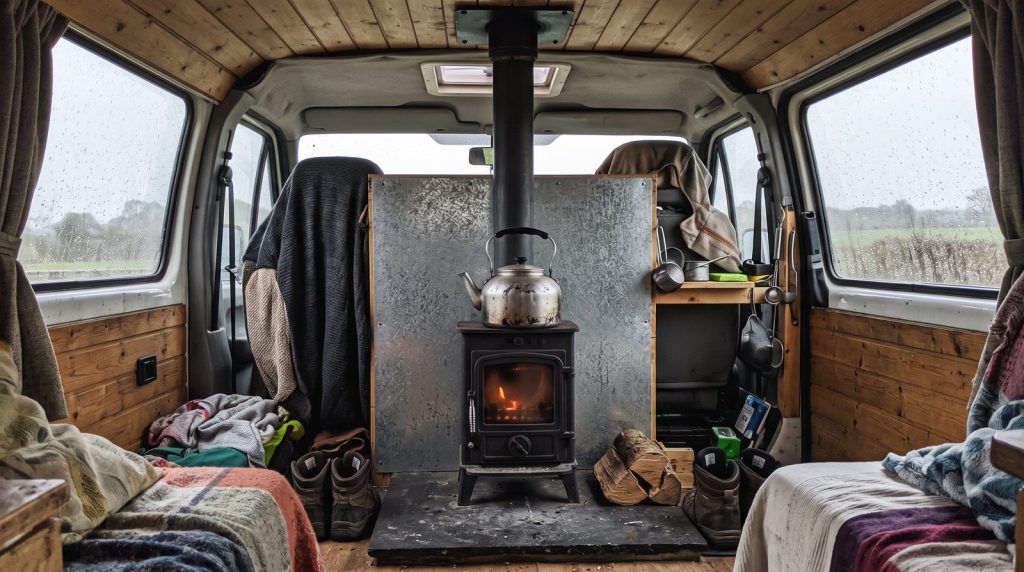
A van or truck conversion is small, so the stove will be closer to combustible surfaces than any stove in a house. Every manufacturer publishes a minimum distance to combustibles, and in a van you’ll rarely have it, which is where heat shields come in.
A heat shield is a sheet of non-combustible material, often metal or a cement board, fixed with an air gap of around 25mm behind it so air can move up between shield and wall.
The air gap is what does the work, because a shield screwed flat to plywood only slows down how quickly the plywood heats up.
The floor needs protecting too, and the stove should sit on a hearth of non-combustible material that extends in front of the door, because embers fall out.
Getting the Flue Right
The flue is where van installations go wrong. It passes through the roof, which means it passes through insulation and lining that will burn.
The section through the roof should be twin-wall insulated pipe, with a proper roof flashing and a storm collar, and enough height above the roof to draw properly.
Single-wall pipe inside the van gives more heat to the room, but anything within reach of hands or bedding needs a guard.
Support the flue properly, because one that hangs off the stove alone will crack a joint on the first pothole. Fit a removable top section so you can lower it for driving, and check every joint after a long drive.
Rules, Insurance and Alarms
There’s no building inspector for a vehicle.
The regulations that govern stoves in houses, such as England’s Approved Document J, apply to buildings, so nobody will certify a wood burner in your van and nobody will stop you fitting a bad one.
Your insurer is a different matter. Tell them about the stove, in writing, before you light it. A conversion with an undeclared solid fuel appliance is the sort of thing a claims handler goes looking for.
Smoke control areas are written around chimneys on buildings, and how they’d be applied to a parked vehicle isn’t settled, so it’s worth knowing whether you’re sitting in one rather than being caught out by it.
Outside the UK, check your own country’s rules on solid fuel in vehicles before you fit anything.
Fit a carbon monoxide alarm regardless. The ones certified to BS EN 50291-2 are designed for vehicles and boats, where damp and vibration finish off household alarms early.
Fit a smoke alarm too, and keep a small extinguisher and fire blanket within reach of the bed.
Nobody checks a van stove for you, so it’s worth going over the flue joints, heat shields and alarms yourself every so often.
Choosing a Small Stove
Campers need tiny stoves. A very small wood burner rated at 1kW to 3kW will heat most van conversions, and even a bus or truck rarely needs much more. Anything bigger in a van will have you opening the door in January.
Purpose-made small wood burners for boats and huts exist, and so do miniature wood burners designed for camping that fold or lift out.
Look for a stove with a proper door seal, an air control you can actually shut down, and a flue collar that takes standard pipe so you’re not improvising adaptors.
Weight matters in a vehicle, so a small steel stove often suits better than a heavy cast iron one.
Choose a stove you can run at the right temperature without cooking yourself, rather than a bigger one you have to keep turned down.
Final Thoughts
A wood burner in a van can be safe and it can be lovely, but it’s a project rather than a purchase.
Clearance, an insulated flue, a fixed hearth, alarms and an honest conversation with your insurer are the whole job. Skip any one of them and you’ve built the hazard everyone warned you about.
If you live in your vehicle through the colder months, gather your own wood and like the ritual, it’s worth doing properly. If you’d rather not think about fuel and timing at all, a diesel heater will serve you better.
If you’re still choosing a vehicle, the converted vans and trucks listed on Homes Off Grid are in our vehicles listings.
To find out more about off-grid living return to our Reading Room.