

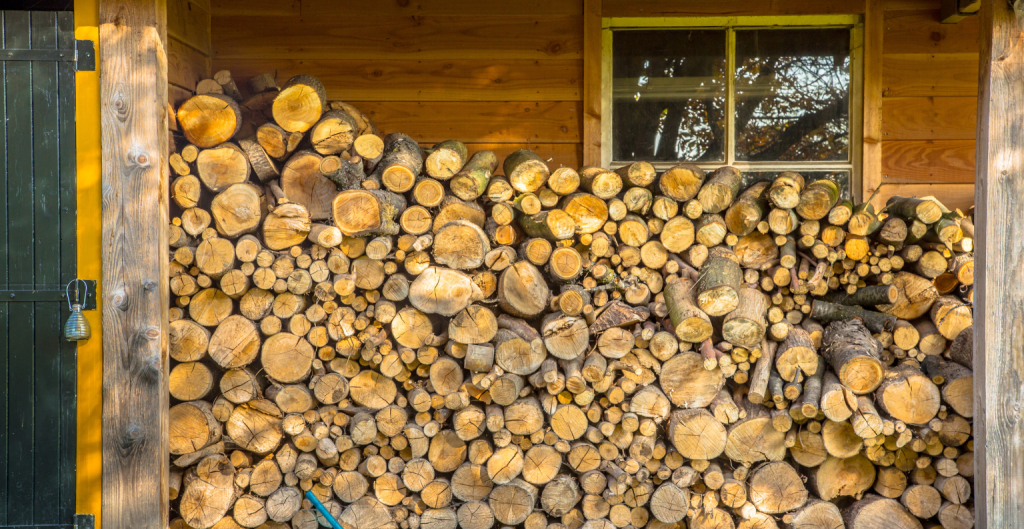
A small, reasonably insulated cabin in daily use may need roughly 3 to 5 loose cubic metres of dry hardwood for a heating season. A larger, draughtier cabin or a softwood-heavy supply may need 6 cubic metres or more, so calculate from expected heat demand and keep a reserve.
Looking for more practical advice on off-grid living and self-sufficiency? Explore the Homes Off Grid Reading Room for more guides, ideas and inspiration.
Hardwood vs Softwood Heat Output (kWh per Cubic Metre)
At the same moisture content, hardwood and softwood release broadly similar energy per kilogram. Hardwood is usually denser, so a cubic metre contains more wood and normally supplies more heat.
Ask how the supplier measures a cubic metre. Forest Research notes that 1 loose cubic metre is approximately 0.66 cubic metres when stacked. For a rough firewood calculator, a loose cubic metre of dry mixed hardwood can be modelled at about 1,300 kWh of fuel energy.
Sizing Log Requirements Based on Cabin Size and Insulation
Begin with useful seasonal heat, not the stove’s kW rating. A 30 m2 cabin with reasonable insulation might be estimated to need 4,000 kWh of useful heat across winter. At 75% stove efficiency, the logs must contain about 5,333 kWh. Dividing by the illustrative 1,300 kWh per loose cubic metre gives 4.1 cubic metres, so ordering 4.5 to 5 allows for colder weeks and variation between loads.
Poor insulation, high ceilings, frequent door opening and exposed upland weather can increase demand sharply.
Understanding Wood Moisture Content and Ready to Burn Rules
Moisture matters more than the species name. Wet logs waste energy evaporating water and produce more smoke, particles and tar. Test the freshly split face of several logs with a calibrated meter and burn them only at 20% moisture or below.
In England, as one example, wood sold in loose volumes below 2 cubic metres must be Ready to Burn certified. Larger deliveries do not require that certification, but suppliers must provide drying guidance. The scheme governs sales rather than making every privately sourced log a certified product. Check the national and local guidance in your own area, including any smoke control restrictions.
How to Tell Hardwood From Softwood
Hardwood comes from broadleaved trees such as oak, birch and beech. Softwood comes from conifers such as spruce, pine and larch. The names describe the type of tree rather than how hard the timber feels, so not every hardwood is physically harder than every softwood.
If you’re identifying standing or freshly cut trees, broad leaves point to hardwood, while needles and cones usually point to softwood. Once logs are split and stacked, it can be harder. At the same moisture level, hardwood is generally heavier for its size, while softwood often lights and burns more quickly. Bark and grain vary by species, so ask the supplier what the load contains if you’re unsure.
Seasoning Wood: Log Store Design and Airflow
A practical log store keeps split logs off the ground, shields the top from rain and leaves the sides open to wind. Face cut ends towards airflow, avoid wrapping the whole stack in plastic and rotate older stock forward. It’s recommended to allow self-sourced or large-volume wood to air-dry for one to two years, depending on when it was cut and the drying conditions, then test it before use.
Cost to Buy Sourced Firewood vs Harvesting from Your Own Woodland
Compare cost per usable dry cubic metre, including delivery and any ambiguous loose or stacked measurement. Bought dry hardwood needs less storage and preparation. Softwood or mixed loads may cost less but occupy more space.
Woodland fuel is not free once safe felling, protective equipment, machinery, access, splitting, storage and one to two years of seasoning are counted. Use sustainable woodland management and never burn painted, glued, preserved or otherwise treated timber.
Practical Action Plan / Checklist
- Estimate seasonal useful heat and confirm the stove’s efficiency.
- Ask whether the quoted volume is loose, stacked or solid wood.
- Check moisture on a freshly split face before burning.
- Store a 10 to 20% reserve without blocking ventilation.
- Review actual use in spring and adjust next winter’s order.