

At a Glance
- A Luton van conversion offers lots of usable space – the box-shaped body makes it easier to create a comfortable, practical home.
- These vehicles are built for carrying weight which can be especially useful when building a home on wheels.
- A used Luton can be a relatively affordable blank canvas, although the vehicle’s condition and weight limits need careful consideration.
If you’re looking at different options for building your own home on wheels, a Luton van might not be the first thing that springs to mind.
They aren’t particularly glamorous. You won’t find the same number of shiny Luton conversions on Instagram as you will Sprinters or classic campervans.
But there are some very practical reasons why a Luton van conversion can make an excellent off-grid home.
What Is a Luton Van?
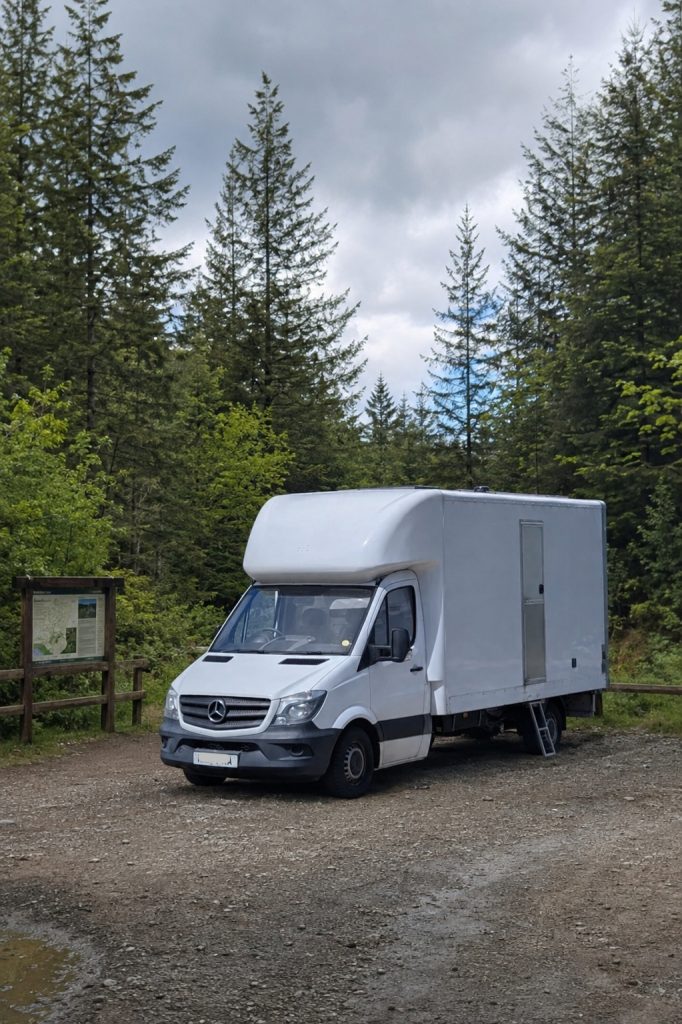
A Luton van is a commercial vehicle with a large box-shaped body extending over the cab. They’re commonly used by removal companies, couriers and other businesses transporting bulky goods.
Instead of starting with the relatively narrow and awkward shape of a panel van, you get a larger, more usable space to work with. And if you’re planning to live in your vehicle rather than simply take it away for the occasional weekend, that extra space can make a huge difference.
The Shape Makes Building Easier
One of the biggest advantages of a Luton is the fact it’s a big box.
The walls are straighter and the interior less restrictive than many conventional vans. That makes it considerably easier to plan where everything will go and build furniture to fit the space. You can create your home without having to make every centimetre work around the curves of the vehicle.
The over-cab section is useful too. Depending on the body and your design, it can provide additional sleeping or storage space without taking up valuable floor area.
The slightly larger dimensions even allow extra room for additional insulation, something you sometimes have to compromise on with a standard van.
Essentially, you’re starting with something that is a much simpler shape than a traditional van interior.
A Commercial Vehicle Designed to Carry Weight
There’s another important reason Lutons can work well for substantial conversions: they’re commercial vehicles.
Many are built on established van or light-truck chassis designed to spend their working lives carrying significant loads. That’s useful when you’re adding everything required for comfortable off-grid living.
Batteries, water tanks, solar equipment, furniture, appliances – all those things add up quickly.
Of course, that doesn’t mean you can load it indefinitely. Every vehicle has a maximum permitted weight, and the payload needs to account for the body, conversion and everything you carry with you.
It’s worth working this out before buying a vehicle rather than discovering you’ve built yourself a lovely home that’s too heavy to legally drive. If it weighs more than 3.5 tonnes you may need to upgrade you’re driving licence.
Plenty of Roof Space for Solar
If you’re building an off-grid vehicle, roof space is valuable.
The large, flat roof of many Luton bodies provides considerably more room for solar panels than you might get on a smaller campervan.
That doesn’t mean you should cover every available centimetre without considering weight, shading and electrical requirements. However, having the physical space available gives you more options when designing your system.
You Can Build Around How You Actually Live
Another benefit of a Luton van conversion is that you’re not necessarily trying to squeeze your life into a layout designed by someone else.
You can decide what matters to you.
Maybe you want an elevated bed in the rear, or a corner bathroom without compromising on a lounge area.
The extra space gives you considerably more flexibility. The blank canvas lets you fit windows and furniture where you choose.
That’s particularly useful if you’re planning to live in your vehicle full-time, rather than just use it for holidays.
They’re Not Without Their Downsides
Of course, there’s no such thing as a perfect conversion base.
Weight is one of the biggest considerations. A large interior encourages you to add more things, and all those things add extra weight.
They’re also tall vehicles, so you’ll need to think about height barriers, low bridges, ferries and where you can park.
Then there’s fuel consumption. A large box-shaped vehicle isn’t exactly aerodynamic, so don’t expect it to be particularly economical.
The body itself also needs careful inspection. Water ingress, damaged floors, rotten sections and a tired roof can turn an apparently cheap vehicle into a very expensive project.
And, as with any used vehicle, the mechanical condition matters. A cheap Luton isn’t necessarily a bargain if you need to spend thousands to get it on the road.
Is a Luton Van Right for You?
A Luton probably isn’t the right choice if your priority is having the smallest, most economical vehicle possible.
But if you want a spacious blank canvas for a DIY home on wheels, it’s an interesting option.
You get a large, relatively straightforward space to build in, plenty of potential payload, useful roof space for solar and the ability to design the interior around your own lifestyle.
Before You Buy: Luton Van Conversion Checklist
- Check the vehicle’s maximum authorised mass and available payload.
- Inspect the body carefully for water ingress, rot and damage.
- Check the condition and history of the engine, gearbox and chassis.
- Measure the internal dimensions before designing your layout.
- Consider the vehicle’s overall height and width for the places you want to travel.
- Allow for the weight of your complete conversion, water, solar, equipment and belongings.
- Budget for repairs as well as the conversion itself.
If you’re still undecided on which type of vehicle you want to convert, try our article on Finding the Perfect Off-Grid Vehicle to Live In
Looking for more practical advice on off-grid living and self-sufficiency? Explore the Homes Off Grid Reading Room for more guides, ideas, and project inspiration.